
The Fire
The Following Is A True Story


My father grew up poor.
When I ask him about it now, he says they were lower middle class—but when discussing my dad’s tumultuous childhood, their socioeconomic status is a key factor. Like an odd relative who showed up in every family photo, always lurking in the background—money was sparse.
Now that I’m older and I understand how people have very different opinions on wealth and money, I know that they weren’t poor. But rather, my paternal grandfather who held the purse strings, didn’t let on if anything was left over and whatever money was left over, he spent on himself.
Alcohol, secretaries, tools, golf clubs, hunting money.
When my dad was a senior in high school, he wanted a letterman jacket to celebrate his seniority, his father bought a new shotgun instead.
So, no—not poor, just not a priority.
The first time I heard about the fire I was twelve.
I’d gotten off the school bus and knew I had about ten minutes to myself before my dad got home from work. I wasn’t totally playing with matches, but I did love to strike one and watch it burn.
I loved the sliding crunch of the ignite, the flame, the smell of sulfur dioxide. I would stand in front of the kitchen sink, strike a match and watch it burn, then run it under the faucet. I wasn’t a total pyro. I knew when to run it under the water and let is simmer in the sink. I got caught playing my little game one afternoon when my dad got home early.
He came in and stuck his nose in the air. “What’s burning?”
I froze.
I hate lying.
I don’t lie.
I just didn’t want to tell him the truth. I stood there, still as a statue. And what I didn’t know as a kid, is that parents have already done all of this.
He knew the dried out and soggy matches would be in the sink.
*Just as I was sitting at my dining room table, my six-year-old son came to me with a box of matches and wanted me to safely demonstrate a strike. He doesn’t know I’m writing this story.
He doesn’t know I write stories at all.
My father, who I now realize operated from a place of anxiety and panic for most of my childhood, lost it.
“You don’t mess with matches!” His voice was thick and heightened. Slamming the used match sticks into the garbage can and searching the kitchen for embers, he paced as worry washed down his forehead. And then as anxiety and unhealed hurt prompts, he overreacted and launched into a story about the worst-case scenario.
His worst-case scenario.
He began to yell a story at me about when his home, when he was twelve, burned to the ground.
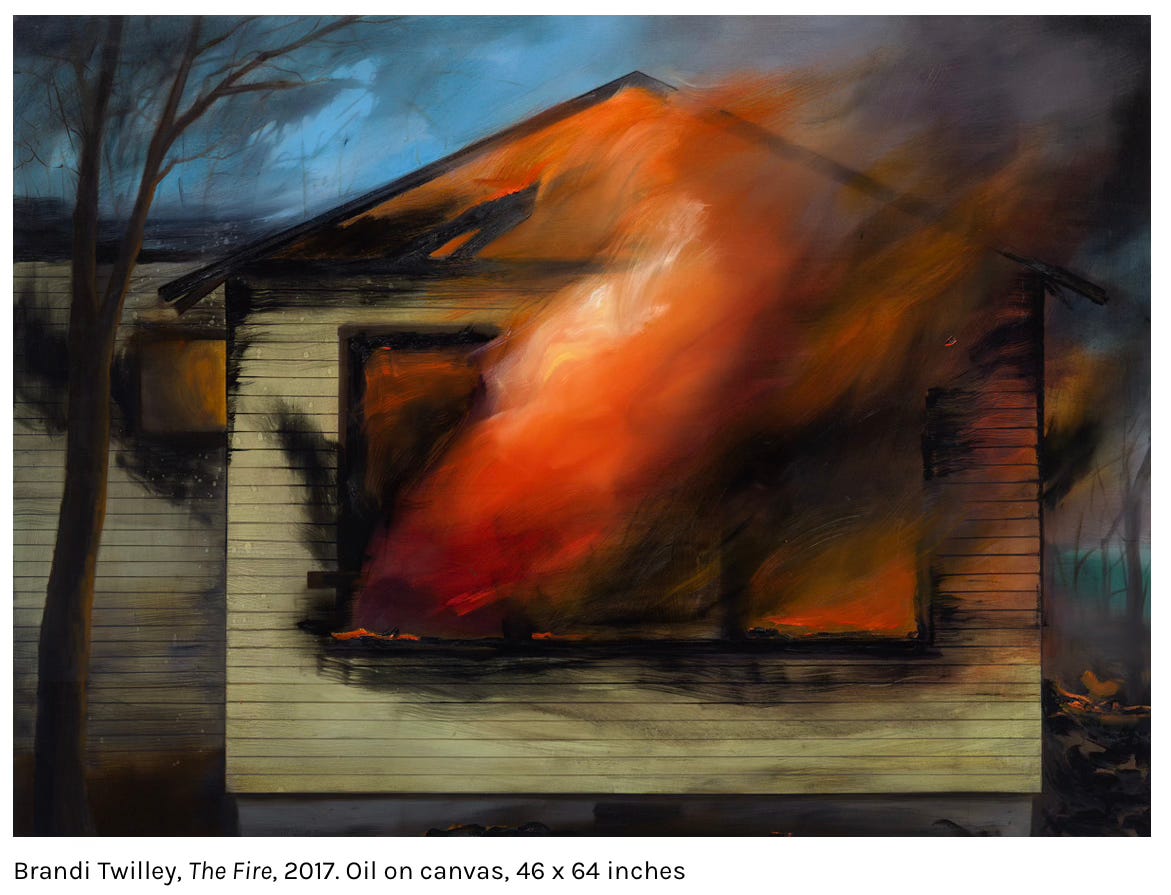
Knowing that money was tight, my dad came home from school one day to find his parents packing up the family Pontiac station wagon. It was 1968, and for the first time in his memory—they were going on a family vacation. My daddy grew up in Obion County, Tennessee, it’s about two and a half hours from Nashville. His parents told him to gather he and his siblings because they were taking a weekend trip to the Grand Ole Opry. He was too excited and too much of a boy to think about where the funds could’ve come from.
As the story goes—the car was packed, the kids were overjoyed, and the station wagon pulled down the driveway. And suddenly the car jerked to a stop, his father threw it in park and told everyone he forgot to grab something inside.
He ran in and out in just a minute. And that was the last time they saw their home upright.
My dad towered over me, the smell of sulfur still filling the kitchen as he told of walking through ash and rubble. “My red phone melted into a ball,” he said. He told me they would have to start over from nothing; they had nothing, they could save nothing. “You’re not old enough to even be able to try and stop a fire. God, what if something happened to you, to our house.” He paced a bit more and then sat me down to finish the story.
He and his younger brother had their own hotel room, they were settling in giddy as colts, drinking Coca Colas, and watching the hotel TV when the phone rang. They had to come home right away; their house had burned down to the foundation.
My daddy still hasn’t seen the Grand Ole Opry.
I sat across from him at our breakfast table. My dad was a weathered kind of handsome, and I watched the deep lines around his eyes get tighter when I asked him more questions. “How did the fire start, Daddy?”
“Well, for a long time they said my dad did it.”
I couldn’t comprehend this. I can hardly understand it now.
“But then another man in town was said to have framed him and set the house on fire for revenge. But the Tennessee Bureau of Investigation couldn’t prove anything on either side. So, they closed the case.”
We will start with the man who allegedly wanted to frame my grandfather.
I won’t say his real name, but it was long and southern, something like a ‘Winston Bradford Graves’. And ole Winston wanted my dad’s dad, named Laurus (also dramatic and southern)—to hire his son at the clothing plant in town. Laurus managed the factory in Troy, TN that produced items like Levi’s blue jeans. Laurus said no. Winston got mad. And then Winston saw an opportunity to… burn his house down? That doesn’t sound right?
The other, and sadly more plausible story is this:
My dad’s dad was a very bitter and angry man. He married a woman that he didn’t want to marry. He had kids that he didn’t want to have. He had a job that just got him by. I think he lived a higher and mightier life in his ego, and my dad bore the brunt of most of his disappointments.
So, on a wild hair, he tries to plan an escape. He figures he needs to get the kids and the wife out of town; a total loss has a big insurance pay out, and his secretary would make for a fine partner to run away with. What my father didn’t tell me at the time was that the house didn’t just burn down, it blew up.
Two cans of kerosene were found in the oven, and the oven had been set on a timer.
He ran in and out in just a minute, he said he forgot something.
For my dad’s entire life, and now for the majority of mine—this story has been a huge question mark over our family. The story will get brought up at dinners or visits and I gawk each time at more details. Until last week I didn’t know the TBI was involved. I didn’t know it was the talk of Obion County for the next three years. Did his dad really do it? It clearly wasn’t an accident, and we know that Laurus was not kind, but to burn down your family home, it all seems so extreme. He must have been so miserable that arson and losing everything he owned may have been worth the fresh start that he never took. He remained married, working at the factory, and fiercely cruel until the day he died.
I called my dad last week to ask him if he cared about me sharing this story with you.
“Sure, I don’t care,” he said. In between my questions other family lore was brought up too.
His grandmother killed a man for hunting on her land.
And her husband put out a lit cigar on his feet in a court room to prove his innocence. They were bootleggers and moonshine was involved in both of those stories.
So why am I telling you about this now? I’m not totally sure.
It certainly isn’t to embarrass my father, or to bring shame to our family. I think because during this season of wintering, we slow down long enough to let our brains wander.
And that is what mine did. I thought about the people in my family and the wild old southern stories that I grew up hearing. Every one of them true—stories with characters in them of heroes, villains, moonshine, highspeed chases, and dead mules.
Since the beginning of time, we have documented our existence. We have documented us by way of art and words, and songs, and poetry, and tattoos. We don’t want our favorite stories to be forgotten, or rather, we don’t want to be forgotten. Sadly, when I think of my paternal grandfather whom I never met, I think of fire. And really, that makes sense on so many levels. We are all still dealing with the smoke that his legacy left behind.
Everyone loves an old southern whodunnit and as it turns out, my family has quite a few of those under our rug.
To this day, my dad swears the Winston Bradford Graves character did it, revenge is best served in a gas tank, or something like that. And truth be told, we will never know who did it or why. The insurance money built back a new home, and my dad left Tennessee in his early twenties and never went back.
But the stories of us, the gnarly legends of our people; people of grit, and poor character, or poor spirits, or heroes, or cycle breakers—those only stick around if we bring it up every now and then.
If you enjoyed this story from Henry House Collective be sure to subscribe to the newsletters + send this to a friend!